Customer voice
Categories
Categories
In the industrial world, motor gearboxes are omnipresent and play a vital role in transmitting the movement of machines.
A motor reducer, also known as a speed reducer, is a mechanical device that transforms the speed and rotational torque of a motor to adapt it to the specific needs of a given application. It is made up of several elements such as gears, bearings and shafts, which work together to adjust the parameters of the rotational movement produced by the main motor.
There are different types of motor gearboxes depending on the application needs and required configuration. Among the main types, we find:
Cylindrical gear reducers: They use spur or helical gears to transmit rotational motion between two parallel shafts.
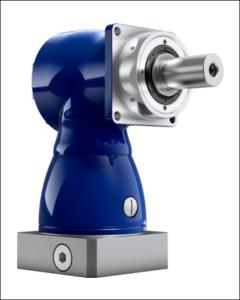
Bevel gear reducers: Made up of bevel gears, they transmit movement between two shafts whose intersection angle is generally 90°.
Planetary gearboxes: They are characterized by a mechanism composed of a central pinion (called "sun") and several satellite gears mounted on a planet carrier. This type of reducer offers high efficiency, great compactness and high load capacity.
Motor reduction gears play an essential role in the transmission of power and movement between the different parts of a machine. Their primary function therefore consists of modifying the rotation parameters at the motor output to adapt the speed, torque and direction to the specific requirements of the application concerned.
Motor reducers are also used in other areas such as:
Improving precision: Thanks to their mechanical design and adjustment devices, gearboxes can help improve the precision of rotary movements by correcting errors linked to manufacturing or wear of parts.
Load distribution: In certain applications, it is necessary to divide the force applied by the motor on several elements in order to reduce the pressure exerted on each part. The reducers thus make it possible to effectively redistribute the loads and balance their distribution.
Motor protection: In the event of a blockage or overload, a gearbox can protect the main motor by limiting the transmitted torque. This function is particularly useful to avoid premature degradation of equipment and minimize the risk of breakdown.
The reduction ratio is one of the main characteristics of a gearbox motor. It expresses the ratio between the rotation speeds at the input (motor side) and output (application side) of the gearbox. The higher this ratio, the more the motor is capable of providing significant torque at a low output rotation speed.
Efficiency designates the capacity of the gearbox to transform the mechanical energy received into useful energy output. This parameter is essential for the overall performance of a mechanical system and must be taken into account when selecting a gearbox. The main factors influencing efficiency are friction losses in gears and bearings, and internal clearances due to design or wear of parts.
Motor gearboxes must be able to withstand difficult conditions of use, particularly in terms of load, speed, temperature or vibration. Robustness and lifespan are therefore two important criteria to consider when choosing a gearbox. They mainly depend on the quality of the materials used, the manufacturing precision and the choice of lubricants.
Finally, the compactness and size of the gearboxes can be determining factors for their integration into a complex mechanical system with constrained dimensions. Manufacturers therefore strive to optimize the size and weight of their products while maintaining optimal mechanical performance.
Understanding the role and characteristics of motor gearboxes is crucial to selecting the right device for each industrial application. Thanks to constant technological advances, these mechanical elements continue to evolve to offer ever greater performance, reliability and versatility.
Trusting kheeos for the purchase of your motor gearboxes not only ensures you have cutting-edge equipment, but also allows you to adopt a committed approach for a more sustainable industrial future.
Here are the closest results
Filters
Approximative matches
In the industrial world, motor gearboxes are omnipresent and play a vital role in transmitting the movement of machines.
A motor reducer, also known as a speed reducer, is a mechanical device that transforms the speed and rotational torque of a motor to adapt it to the specific needs of a given application. It is made up of several elements such as gears, bearings and shafts, which work together to adjust the parameters of the rotational movement produced by the main motor.
There are different types of motor gearboxes depending on the application needs and required configuration. Among the main types, we find:
Cylindrical gear reducers: They use spur or helical gears to transmit rotational motion between two parallel shafts.
Bevel gear reducers: Made up of bevel gears, they transmit movement between two shafts whose intersection angle is generally 90°.
Planetary gearboxes: They are characterized by a mechanism composed of a central pinion (called "sun") and several satellite gears mounted on a planet carrier. This type of reducer offers high efficiency, great compactness and high load capacity.
Motor reduction gears play an essential role in the transmission of power and movement between the different parts of a machine. Their primary function therefore consists of modifying the rotation parameters at the motor output to adapt the speed, torque and direction to the specific requirements of the application concerned.
Motor reducers are also used in other areas such as:
Improving precision: Thanks to their mechanical design and adjustment devices, gearboxes can help improve the precision of rotary movements by correcting errors linked to manufacturing or wear of parts.
Load distribution: In certain applications, it is necessary to divide the force applied by the motor on several elements in order to reduce the pressure exerted on each part. The reducers thus make it possible to effectively redistribute the loads and balance their distribution.
Motor protection: In the event of a blockage or overload, a gearbox can protect the main motor by limiting the transmitted torque. This function is particularly useful to avoid premature degradation of equipment and minimize the risk of breakdown.
The reduction ratio is one of the main characteristics of a gearbox motor. It expresses the ratio between the rotation speeds at the input (motor side) and output (application side) of the gearbox. The higher this ratio, the more the motor is capable of providing significant torque at a low output rotation speed.
Efficiency designates the capacity of the gearbox to transform the mechanical energy received into useful energy output. This parameter is essential for the overall performance of a mechanical system and must be taken into account when selecting a gearbox. The main factors influencing efficiency are friction losses in gears and bearings, and internal clearances due to design or wear of parts.
Motor gearboxes must be able to withstand difficult conditions of use, particularly in terms of load, speed, temperature or vibration. Robustness and lifespan are therefore two important criteria to consider when choosing a gearbox. They mainly depend on the quality of the materials used, the manufacturing precision and the choice of lubricants.
Finally, the compactness and size of the gearboxes can be determining factors for their integration into a complex mechanical system with constrained dimensions. Manufacturers therefore strive to optimize the size and weight of their products while maintaining optimal mechanical performance.
Understanding the role and characteristics of motor gearboxes is crucial to selecting the right device for each industrial application. Thanks to constant technological advances, these mechanical elements continue to evolve to offer ever greater performance, reliability and versatility.
Trusting kheeos for the purchase of your motor gearboxes not only ensures you have cutting-edge equipment, but also allows you to adopt a committed approach for a more sustainable industrial future.